INTRODUCTION
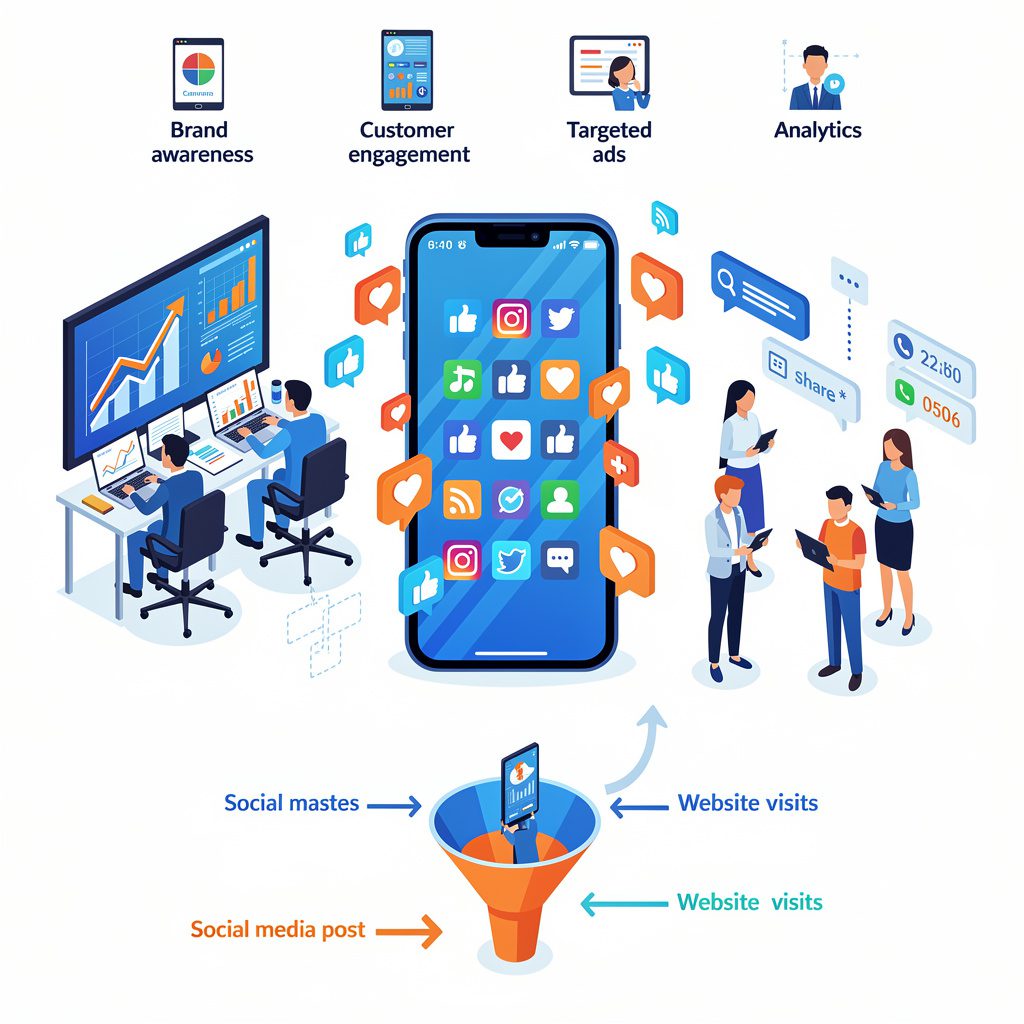
In today’s digital world, social media is no longer just a platform for connecting with friends. It has become one of the most powerful tools in digital marketing. Businesses of all sizes use social media to reach customers, build trust, and increase sales. From startups to global brands, everyone is investing time and money into creating a strong online presence.
With billions of users active daily on platforms like Facebook, Instagram, LinkedIn, TikTok, and X, social media offers unmatched opportunities for visibility and growth. Whether you run an eCommerce store, a service-based business, or a personal brand, understanding how social media supports digital marketing is essential.
In this article, we’ll explore how social media helps in digital marketing, why it matters, and how you can use it effectively to grow your brand.
The Growing Importance of Social Media in Digital Marketing
Digital marketing includes SEO, content marketing, email marketing, paid ads, and more. However, social platforms connects all these strategies together.
Why is social media so important?
- It provides direct access to your audience
- It allows real-time communication
- It supports both organic and paid strategies
- It helps brands stay visible and competitive
According to research OF WIKIPEDIA billions of people actively use social networks worldwide. This massive user base makes social media one of the most effective digital marketing channels available today.
Businesses that ignore these points risk losing visibility and market share to competitors who are actively engaging online.
1. Social platforms Increases Brand Awareness
One of the biggest benefits of these platforms in digital marketing is brand awareness.
Global Reach
With just one post, businesses can reach audiences across cities, countries, and continents. Unlike traditional advertising which is geographical limited
Organic Visibility
When users like, comment, and share posts, content spreads organically. Hashtags, trends, and short-form videos increase discoverability.
Consistent Branding
Social media allows brands to:
- Maintain a consistent voice
- Share visual identity (logos, colors, style)
- Post regularly to stay top-of-mind
For example, businesses can create helpful blog content on stringsport.com and promote it through social channels to increase exposure and website visits.
The more consistently you show up on social media, the more recognizable your brand becomes.
2. Enhances Customer Engagement
Traditional marketing focuses on one-way communication. Social platforms on the other hand, encourages two-way interaction.
Direct Communication
Customers can:
- Comment on posts
- Send direct messages
- Participate in live sessions
- Respond to polls and questions
This builds trust and strengthens relationships.
Community Building
Groups and online communities help brands build loyal followers. Engaged communities are more likely to recommend products and services to others.
It makes customers feel heard. When businesses respond quickly and professionally, it improves brand reputation and customer satisfaction.
3. Drives Targeted Traffic to Your Website
Traffic is essential for digital marketing success. Social media acts as a powerful traffic source.
By sharing:
- Blog posts
- Product pages
- Service pages
- Landing pages
you can direct users to your website.
For instance, Agencies like stringsport.com promote its services through social platforms so that they can significantly increase visits and engagement.
Unlike random traffic, traffic is often highly targeted because followers are already interested in your niche.
Websites like HubSpot.com and Moz.com also highlight how social signals and content sharing indirectly support SEO performance.
4. Improves Lead Generation and Conversions
Generating leads is one of the main goals of digital marketing. These social channels offers multiple tools to capture leads effectively.
Built-in Lead Tools
Platforms like Facebook and LinkedIn provide:
- Lead generation forms
- Call-to-action buttons
- Click-to-message ads
These tools simplify the process of collecting user information.
Retargeting Potential Customers
If someone visits your website but doesn’t make a purchase, social channels ads can retarget them. This increases the chances of conversion.
Social Proof
Positive reviews, testimonials, and user-generated content influence buying decisions. When people see others recommending your brand on social media, trust increases.
As explained in marketing insights on NeilPatel.com, trust and repeated exposure significantly improve conversion rates.
5. Cost-Effective Advertising with Better ROI
Compared to TV, print, or radio ads, online advertising is affordable and measurable.
Advanced Targeting
You can target users based on:
- Age
- Gender
- Location
- Interests
- Online behavior
This ensures your ads are shown to the right audience.
Flexible Budget
Businesses can start with a small budget and scale based on results.
Measurable Results
Unlike traditional marketing, social media provides real-time data on:
- Clicks
- Impressions
- Engagement
- Conversions
This helps optimize campaigns for better performance and return on investment (ROI).
6. Strengthens Brand Authority and Trust
Trust is essential in digital marketing. Social platforms helps build credibility in several ways.
Sharing Valuable Content
Posting educational and helpful content positions your brand as an industry expert.
Customer Testimonials
Positive reviews shared on social media build confidence among potential customers.
Influencer Collaborations
Partnering with influencers expands reach and builds trust through recommendations.
When businesses consistently provide value on social media, they establish themselves as reliable and professional brands.
7. Supports Content Marketing Strategy
Platforms like Instagram and Facebook and other social channels supports content marketing
If you create:
- Blog articles
- Infographics
- Videos
- Case studies
social media becomes the distribution channel.
Without promotion, even great content may not get noticed. Social media ensures your content reaches the right audience quickly.
For example, after publishing a detailed marketing guide on stringsport.com, sharing it across multiple social media platforms increases its visibility and engagement.
8. Provides Data and Performance Insights
One of the strongest advantages of social media is access to analytics.
Each platform provides insights such as:
- Audience demographics
- Engagement rate
- Reach and impressions
- Best posting times
These insights allow businesses to make data-driven decisions.
Instead of guessing what works, you can adjust your strategy based on performance results.
Over time, this leads to better engagement and improved marketing outcomes.
9. Keeps Businesses Competitive
Your competitors are already using social media. If your business is not active, you risk falling behind.
Being active on social media helps you:
- Monitor competitors
- Stay updated with industry trends
- Understand customer preferences
- Adapt quickly to changes
Digital marketing is constantly evolving, and social media helps brands stay flexible and relevant.
Challenges of Using Social Media in Digital Marketing
While social media offers many benefits, there are challenges:
- High competition
- Changing algorithms
- Need for consistent content creation
- Managing negative comments
Success requires strategy, patience, and creativity. Posting randomly without a plan may not deliver results.
Conclusion
Social media has completely transformed digital marketing. It increases brand awareness, strengthens engagement, drives website traffic, generates leads, and improves sales. With advanced targeting and measurable results, businesses can achieve strong returns even with limited budgets.
By combining high-quality content with a clear strategy, social media becomes a powerful growth engine. Whether you are promoting products, services, or educational content on platforms like stringsport.com, leveraging social media can significantly expand your reach and impact.
As digital competition grows in 2026 and beyond, businesses that use social media strategically will continue to stand out, build trust, and achieve long-term success.
